Monday, 1 May 2017

Sunday, 30 April 2017
Preliminary Task 2 - Creative Critical Reflection
How Does Your Product use or Challenge Conventions? And How Does it Represent Social Groups or Issues?

How Does the Product Engage with Audiences and How Would it Be Distributed as a Real World Media Text?
How Did your Production Skills Develop Throughout this project?
How Did You Integrate Technologies In this Project?
 |
| The Adobe Editing Suite |
 |
| The cut scene involving a lot of sounds added together |
 |
| The shot where I broke up the long shot with small cuts |
 |
| The setting for editing speed/duration |
Opening Sequences Thriller Codes and Conventions:
Memento:
In this psychological thriller, Christopher Nolan presented a film completely different to anything audiences had seen before, and used conventions to a new effect. It uses close-ups to to show what is happening throughout the scene, and to show us how the scene is playing out (which is, of course, backwards). An example of this is the development of the picture of the man who has been shot, fading away instead of developing. This forces us to focus in on what exactly is happening, and adds a claustrophobia to the whole atmosphere, an unsettling feel permeating off the shot.
 |
| The use of a close-up to show how some events play out in the scene helps adds a mystery to exactly what is happening. |
In this opening scene, we also experience a massive question which is asked in psychological thrillers, which is, is this set in the real world or set in the mind? From the first scene we are introduced to a way of editing which makes us immediately suspect what is happening. Obviously time does not go backwards, so are we seeing this character's memories? Is the character the narrator here? We ask these questions simply by the editing, and that is what a psychological thriller should do, and Nolan uses that to help build the audience's interest in the opening sequence.
Mirrors are a huge symbol and convention of the psychological thriller genre, used to reflect the person's inner self and explore their 'dark side'. Nolan takes this convention and twists it in a unique way, using a photograph to reflect the main character's inner self. We open on a shot of a photograph of a person who has been shot. Immediately we are opened up to the main character's actions and ways of dealing with a situation, and see a glimpse into his motives, telling us that this character is inherently violent and brutal, and we haven't even seen his face yet.
Here is a clip of the opening:
The Bourne Identity:
In Doug Liman's incredible thriller, he uses a lot of conventions in the thriller genre to help set up his film. One is the lighting of the opening, with lots of dark shadows and unclear images, the water obscuring vision, this method is used to create mystery and makes the audience question what is happening. It could also be seen as a way into Bourne's mind, reflecting the murkiness of his memory and past.
 |
| The shadows surround Bourne, reflecting how he is shrouded in mystery. |
Another convention the director uses is the use of shots to portray Bourne, usually using a range from medium wides to extreme wides to show Bourne's situation. These are used in action thriller to express clearly the action taking place or in other thrillers to express loneliness of a character. In this scene Liman uses it more for the loneliness factor, helping to show the audience Bourne's drifting and loneliness. It, again, makes the audience question the situation, wanting answers from the small teaser of an opening.
Here is a clip of the opening:
Drive:
This neo-noir crime thriller by director Nicolas Winding Refn has a very subtle yet important quality, opening with a rule that the audience needs to know for the rest of the film. It uses a quality that is very important to neo-noir thrillers, which is the lighting. The tonal values that ooze from this shot are soft yet dark, with a lot of difference between light and dark. This can be symbolic of the danger of the driver's job, how he is in a sea of danger yet he stands and prospers in this setting. This entices the viewer into the intentions of the driver, and makes the viewer want to know more about him and his little business he runs.
Another thriller convention Refn uses in this scene is the use of diegetic sound in the scene, a very slow, subtle beat vibrating throughout the scene. This trope is used in thrillers to help build tension and sometimes to add an unease to a scene, and this is definitely present in this clip. The sound is almost frantic in nature, and this can reflect the nature of the "five minute window" he gives to his clients, and this can help give the audience a glimpse into the frantic nature of his job for his clients, that time is ticking.
Here is the clip:
 |
| This picture expresses the tonal values of this scene. |
Here is the clip:
Wednesday, 12 April 2017
Representation Codes and Conventions
1) Gender
Into The Badlands (2015)
In this fight between Barons Quinn and the Widow, the producers have quite cleverly subvert the views of gender that a lot of shows have. Usually the female is presented as a love interest in need of safety and protection, but here they are presented as someone who stands up to the male and takes them on with equal skill. The use of keeping the camera focused on both characters and not just the male helps show how well matched they are in battle, the use of the camera facing down on both of them at 0:49 showing weaknesses in both characters. Both wearing dark colours gives a subtle power to both, again not raising the male above the female in appearance, but showing both to stand out from the pristinely white-washed background. The editing allows focus on both characters to recover from injuries and enjoy success, which helps add this overall balance of power and skill to the clip, the audio full of diegetic sound amplifying both character's successes and failures. Overall, there is a massive balance in each character in this scene which is a huge subversion of the gender trope of men having more power than women.
 |
| A shot which expresses the balance of character domination in the scene with both characters being given an overhead shot. |
2) Ethnicity
To Kill A Mockingbird (1962)
In this scene from the 1962 classic, there is a huge underlying theme of racism running through it. The lack of MCUs and any type of close-ups of Mayella helps give us a separation from him, with the use of MCUs of the woman helping us to feel aligned to her views. The editing of the scene quickly passes Mayella and instead lingers on the woman and how she reacts to the scene, which forces the viewer to observe the scene from her perspective as we witness her reactions more than Mayella. The lack of dialogue from Mayella and the overwhelming cries of the woman also pound us with her voice and views, dumbing down Mayella's opinions and perspective. The clothes that Mayella wears gives him a much more poor, lower-class status, but the dress of the woman seems much more elegant and more higher-class, which gives her a power of status over Mayella, which at the time was common for these races to be organised in such a way status-wise.
 |
| The use of focusing on the back of Mayella helps show how much power this ethnicity has over the woman. |
3) Identity
The Bourne Identity (2002)
In this clip from this 2002 thriller, it is a key moment in exploring the topic of Bourne's identity. We are shown different elements of Bourne's past with the bullet wounds and the holographic display item. All of this is shown with uses of dark lighting, only some small glowing lights showing the audience what is happening, displaying how shrouded Bourne's identity is and how there are only a few things which point him in the way of finding this identity. A lot of the shots throughout of Bourne are MCUs and close ups, helping to express the confusion he feels about his identity, the shakiness of the shots also showing us how unstable Bourne is as a character in this moment. The editing throughout is slow and observant, taking its time to give us a minimalistic picture of who Bourne is and what state he is in. And the audio of the piece is very raw, not hiding any sounds such as the thunder rumbling, which shows the rawness and simplicity of how we see Bourne, and how we only have a very small idea of who he actually is, a very raw picture.
 |
| Close Up of Bourne trying to take in the situation around him, a huge feeling of disorienfad etation is around this character |
4) Romance
La La Land (2016)
The song 'City of Stars' in this hit film really does catch perfectly the dream-like romance between Sebastian and Mia. The tracking camera, almost as if it is simply observing what is happening, gives an ethereal flow to the actions of Sebastian as he dances and sings his way around the wharf. The audio is fully non-diegetic, again lifting the audience out of reality, helping the audience observe a flow throughout the sequence, their relationship seemingly in a more dreamy state than real. There is only one transition to another shot in this clip, a fade at 0:48 which again carries this ethereal feel, a soft transition to Mia not a harsh cut, their romance soft and building, seemingly like no troubles. The lighting is made up of purples and greens, and these colours do not clash with one another, they fade into each other softly and seamlessly. There is a certain encompassing of green in the second half of the clip, which could represent their love wrapping around them more and more, yet it is still soft.
 |
| The green lighting can represent how they are basked in love and romance |
5) Age
The Breakfast Club (1985)
In this excerpt from the classic film, there is a definite contrast of ages portrayed. There is a definite separation portrayed through the use of different sized shots, with the teacher shot mostly with medium shots, but a lot of MCUs for the students, which helps represent the power the teacher has over them, encompassing more space of the room. The audio for the scene is completely diegetic, planting us in the now, the awkward silences helping to align us with what the students are feeling, which is already a sickness of being there, representing the childish age they are in. the editing is slow, observing each character's reaction to what happening around them, which represents the different ways each age group reacts with the same situations. The mis-en-scene is quite bland, and is very simplistic, which can represent how the students are feeling at the time, which is most likely boredom.
 |
| The focusing on different reactions really helps show how each age group reacts to the situation |
6) Class
Blade Runner (1982)
In this iconic moment from the philosophical sci-fi, there is a huge representation of the balancing of classes. Deckard, in the universe the film is set in, would be considered as part of a higher class than Batty, yet here the camera is presenting them in either a close-up, MCU or Batty as the more dominant, representing the balancing of these two classes. The audio is a mix of diegetic and non-diegetic, which could possibly represent the mingling of the two classes, and once again the balancing of power. The editing is slow yet not lingering, which can help show the progression to the ultimate balancing of classes through a steady climb towards that point, which is when the speech 'Tears in the Rain' starts. The lighting is blue and hazy, which can represent, however, the haziness of where the power of which class lies, asking the question of who really has more control over this situation?
 |
| The use of haze and blue is used to great effect in this clip |
Wednesday, 22 March 2017
Preliminary Task 1 - Creative Critical Reflection
The Final Delivery Short Film:
How Does The Product Use or Challenge Conventions and How Does it Represent Social Groups or Issues:
In our first preliminary task, we tried to stick mostly to the conventions of a thriller with our technical approach in camera, audio, editing, and mis-en-scene.
How Does Product Engage with Audiences and How Would it be Distributed as a Real Media Text:


How Did Your Production Skills Develop Throughout this Project:
How Did You Integrate Technologies in this Project:
 |
| Screenshot of the song |

I only used Adobe Premier Pro for the effects I put into the short, such as the flash effect used when the Agent is shot, and for the title sequence at the beginning. I also used it for adjusting the audio and adding additional audio, for example, the music playing in the background.
 |
| The moment when the agent is shot and the moment I would like to have integrated a gunfire effect with added blood |
If I could go back and redo some uses of technology, I would have integrated a gunfire effect from After Effects to help make the moment more realistic and even more grounded. Also, I would have used After Effects to add in some fake blood to help sell the reality of this situation being possible.
Tuesday, 7 March 2017
Thriller Sub-Genres
Action Thriller:
This sub-genre uses physical action to create the suspense in a film, involving various types of stunts, fights, and chases to help build the tension and suspense in a film. A trending convention that runs through them is using a resourceful hero who has to struggle against seemingly impossible odds. In the plot the antagonist is usually a terrorist or psychopath, and the protagonist is usually crime-fighting in some way. This involves themes of hero verses villain, and the maiden being in distress, the protagonist having to retrieve her from the villain. In terms of mise-en-scene, guns and other types of weapons are used by the protagonist and the antagonist, and the lighting is usually a bit brighter and high-key than other thriller sub-genres to show the action taking place clearly, but this isn't always the case, with low-key lighting used to create an atmosphere of uncertainty and heightened danger, portrayed in these scenes from 2012's Skyfall. Higher-key lighting here, and lower-key lighting here.
Some examples of action thrillers are
 |
| Die Hard (1988) |
 |
| Skyfall (2012) |
 |
| Kill Bill: Vol 1 (2003) |
Crime Thriller:
A crime thriller is a mesh of the suspenseful elements of a thriller with the plot of a crime film. The plot typically centres around the criminal and his actions, and the protagonist and how he tries to solve these crimes. They can use both action and psychological elements to help build suspense and tension, this tension usually built up slowly throughout as the protagonist solves the crimes. There is always an enigma surrounding the antagonist and his actions, helping add to the mystery that the protagonist must solve. Guns are very symbolic of danger and murder, the use of a weapon used in a crime and by the protagonist. In these films the lighting is very low-key, shadows and dark colours used to add a murkiness to the cases, an unease. The camera work is usually used in close ups at the crime scenes, indicating to the audience what they should be looking at to piece together the puzzles in their mind.
An example of this sub-genre are:
 |
| The Usual Suspects (1995) |
Film-Noir:
This sub-genre is not named this just because of its storyline and conventions, but for its stylistic way of depicting the story in terms of mise-en-scene, which was popular during the 1940s and 50s. This lighting is presented in a black and white palette, with stark lighting effects.This can help produce a sense of nostalgia, a throwback to the past, reflecting the flashbacks it uses. The main character involved is usually cynical in some way, and this sub-genre relies on a narrative voice and flashbacks to explain its intricate plot.
An example of this sub-genre is:
 |
| Sunset Boulevard (1950) |
Psychological Thriller:
Utilising the traits of a regular thriller, this sub-genre builds on it by incorporating elements of drama and mystery. the suspense is usually wrapped up in the main character's mind instead of a more physical threat. The protagonist tends to rely on mental resources rather than physical to solve the problem at hand. It can also blend with the horror genre. A huge theme that this sub-genre deals with is the question of reality, is this set in the real world or is this tension all in the character's mind? This creates an unease and an uncertainty to the whole situation. Linked to this is the theme of identity and how that affects the plot, with mirrors used to reflect the question of the person's inner self and explore their 'dark side'. This exploration of the inner self is further helped by the use of mid-shots and close-ups, helping to portray the character's emotions and give a much more up close and personal view of them.
A few examples of this type of sub-genre are:
A few examples of this type of sub-genre are:
 |
| Memento (2000) |
 |
| Taxi Driver (1976) |
 |
| Rear window (1954) |
Science Fiction Thriller:
This sub-genre incorporates hypothetical, science-based themes such as unexplored locations, fantastical quests, and advanced technology. A lot of these films deal with the future and and what happens in the near or distant future, including scenarios of aliens invading earth, dystopian societies, and super diseases. The music within this sub-genre can vary, sometimes using more space-age sounding music involving keyboards and electric guitars etc. But, as in Guardians of the Galaxy (2014) where the soundtrack is from Star-Lord's personal playlist, the music can be associated with the main character. The mis-en-scene in this type of film can vary hugely, with the settings and props having to work within the time-period and tone that the director is aiming for. For example, the movie Aliens (1986) has very old and decrepit props to show their age and use, and the settings are dark and dingy, adding a sense of lurking from the aliens and heightening their threat of danger. On the other hand, the film Oblivion (2013), where the props are much more technological and clean, and the settings are much more modern and again technologically advanced, giving a less grounded look to the future and a more advanced feel.
A few examples of this type of sub-genre are:
 |
| Aliens (1986) |
 |
| Oblivion (2013) |
 |
| Guardians of the Galaxy (2014) |
Religious Thriller:
This sub-genre injects religious themes, such as life and death, heaven and hell, the soul etc, into its overall message. Some revolve around a specific church, but a lot of them usually include supernatural experiences not pertaining to a certain religion as a major part of their plot. This sub-genre can tend to mesh with horror films and psychological thrillers, The Exorcist (1973) a classic example with its purely horror elements of gore and supernatural aspects involving demons, but using this in a religious setting of an exorcism. The editing of a religious thriller can usually be fast cuts to capture the tension in the moment, but is sometimes slow and building with its tension and suspense. This slow pace editing at the end is used in The Da Vinci Code (2006), where the reveal is told in slow, mounting shots of Tom Hanks' character running around solving the final puzzles.
A few examples of this sub-genre are:
 |
| The Exorcist (1973) |
 |
| The Da Vinci Code (2006) |
 |
| The Devil's Advocate (1997) |
Monday, 6 March 2017
Preliminary Task 1 - Planning
Storyboard:
For our storyboard we went through a few changes near the end of the planning stage in terms of where the gunman who shoots Walter/Person is positioned, from behind the Boss to behind Walter, added dialogue to Walter's character, and some shots near the end of the sequence to help fluidly present this action.


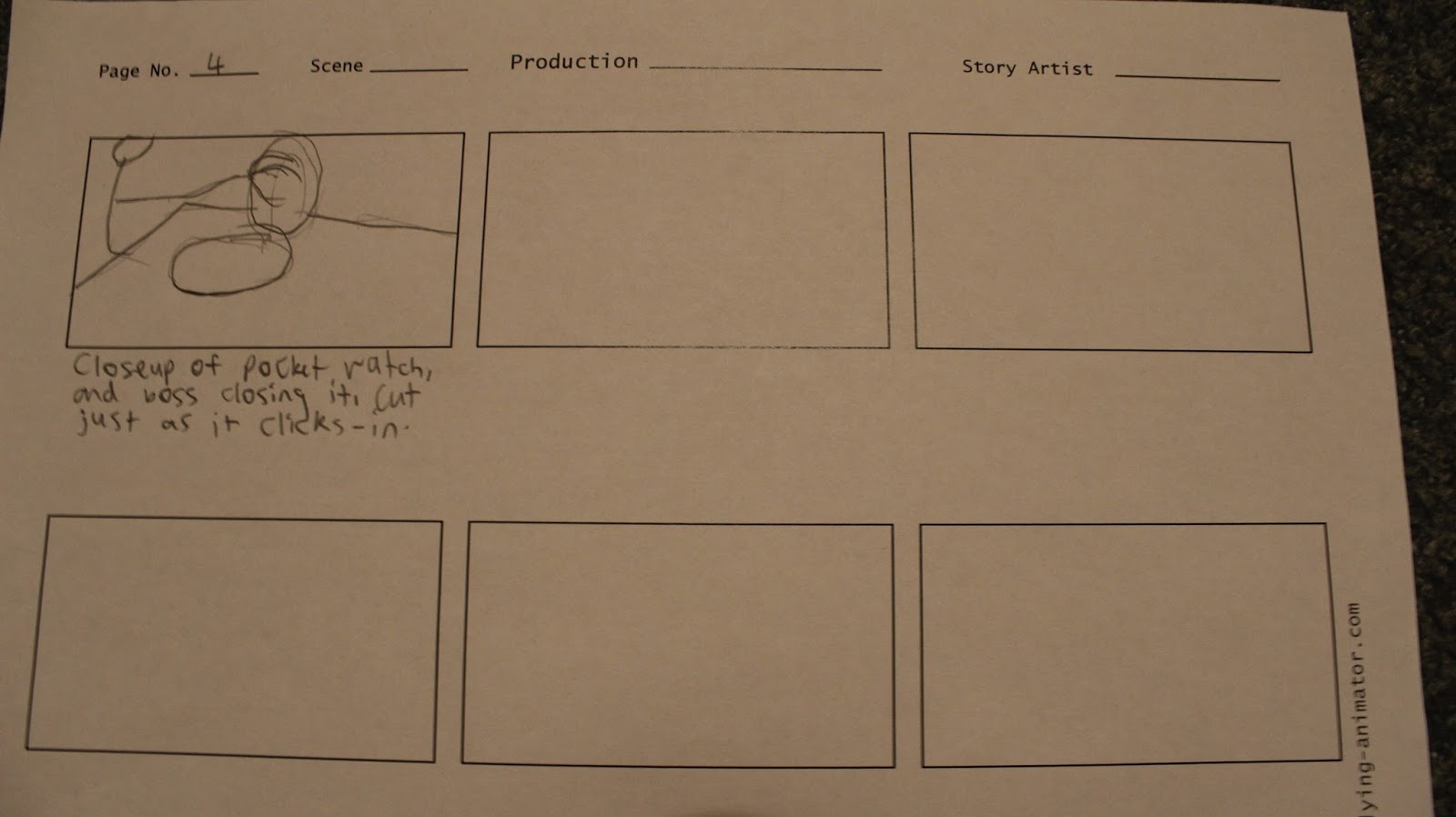
After completing the first version of the storyboards, I went away and compiled a shot list describing them in order of how we will film them. I found out after that this is not the most conventional way of doing a shot list and in the industry it is standard to write them up in order of how they will be edited into the final cut. However, for a small project such as this, it does not affect anything, it is only in feature length films where it can very tricky and overly-complicated if I use this tactic.


Script:
Jackson Veale worked on this aspect of pre-production, as he does have the ability to create a great atmosphere in his writing and is superb with dialogue. There were only a few changes made to the first draft when we changed the position of the gunman in the storyboards.
Props & Costumes
James Murray focused on this area more than Jackson Veale and me, organising props and costumes and doing research for the look of each item. We did help, by bringing our own props and costumes in and contributing opinions on what styles would work or not.
We decided to give Walter a baseball jacket to help show the audience that this man is intended to blend in, he does the fieldwork for the Boss, and he wears more heavy-duty boots to show that he does do some heavy-lifting and is used to being tough situations, but this contrasts with his character at this point of time, in which he is timid and fearful.
The Boss' attire was simple to imagine. We wanted to give him an air of authority, reflected in the wool-jacket and hat that he wears, his glasses blocking his eyes to show no emotion.
Conventions:
We want to use very contrasted lighting in terms of light and dark. There will be very few lights, only the ones focused on the characters and illuminating them. This is a typical lighting scheme for a thriller.
Subscribe to:
Posts (Atom)